
We Started
"Before we built a company, we helped vendors get their licenses. One by one. It was slow, personal work—and it taught us everything we needed to know."
What We Saw.
"We didn't start with a hypothesis. We started by paying attention to the numbers—and the people behind them."
In India's unincorporated sector
Employed in informal economy
Operates informally
Across Indian cities
Source: Annual Survey of Unincorporated Sector Enterprises (ASUSE) 2023-24, Ministry of Statistics & Programme Implementation, Government of India
A vegetable seller in Secunderabad works 14-hour days. She's never missed a tax payment. But she operates in constant fear of an inspection she doesn't understand.
There are over 10 million street vendors in India. Most have never been told what compliance means.
A tech startup with ₹10 crore funding has a full-time legal retainer. A restaurant with ₹10 lakh revenue has nobody to call when a notice arrives.
The cost of legal protection scales inversely with the ability to afford it.
The same Constitution that protects large corporations also protects street vendors. But the infrastructure to access that protection is distributed unequally.
Articles 14, 19(1)(g), and 39(c) guarantee rights that most citizens cannot practically exercise.
Legal complexity isn't random—it compounds most heavily on those with the least resources to navigate it.
A single compliance miss can end a livelihood that took decades to build.
India adds 12+ lakh businesses to the informal sector every year. Most will never transition to formal status—not by choice, but by lack of access.
The informal-to-formal transition rate remains one of the lowest among developing economies.
"These are not complaints. These are observations. And observations, if taken seriously, become the foundation for action."
Rooted in the
Constitution.
"Our work is anchored in the highest law of the land. The right to trade, economic justice, and equality before the law are not aspirations—they are constitutional promises. Our job is to make those promises accessible."
Equality Before Law
The State shall not deny to any person equality before the law or equal protection of the laws withi...
Freedom of Trade & Business
All citizens shall have the right to practise any profession, or to carry on any occupation, trade o...
Economic Justice
That the operation of the economic system does not result in the concentration of wealth and means o...
Constitution
of India
Preamble
"We, the people of India, having solemnly resolved to constitute India into a Sovereign, Socialist, Secular, Democratic Republic..."
What We Hold True.
"These aren't marketing statements. These are the principles we come back to when we're unsure what to do."
Access Is a Right
Legal protection shouldn't be a privilege reserved for those who can afford Tier-1 law firm retainers. Every entrepreneur—street vendor or startup founder—deserves the same level of care.
Complexity Is Not Inevitable
We use technology to absorb complexity, not pass it on. What feels overwhelming to you happens quietly in our systems. The burden of understanding should fall on us, not on you.
Technology Serves, Never Replaces
AI can process faster than any human. But judgment, nuance, and accountability require human minds. Our technology amplifies human expertise—it doesn't automate it away.
Transparency Is Non-Negotiable
You'll never wonder what you're paying for or what's happening with your case. Every fee is disclosed upfront. Every status is visible. We operate as if you're watching—because you are.
Trust Is Earned Slowly
We measure success by the businesses that come back to us. Not because they have to—but because they want to. Reputation is built in years, not in marketing campaigns.
We Think in Decades
Every decision we make considers what this looks like in ten years. We're not optimizing for the next quarter. We're building infrastructure that will outlast us.
How This Began.
"Not a business plan. A series of moments that made it impossible to look away."
Street Food & Friendship
It started with something simple—a love for street food. Every evening in Hyderabad, I'd visit the same vendors, building relationships over chai and conversations. Their stories became part of mine. I learned their names, their families, their dreams. These weren't transactions. They were connections.
Understanding comes from proximity, not observation from a distance.
When Bittu Disappeared
One day, my favourite vendor, Bittu, was suddenly removed by authorities. He lacked a GHMC trade license and FSSAI approval. He had been feeding families for years—children on their way to school, office workers on lunch breaks—but the system had never acknowledged him. His livelihood ended in an afternoon.
The gap between law as written and law as lived is measured in human cost.
Not Just One Story
Bittu's story wasn't unique. I spent six months interviewing vendors across 15+ communities in Hyderabad. The same pattern emerged everywhere: honest people, working hard, living in fear of a system they couldn't navigate. Not because they didn't want to comply—because nobody had shown them how.
Systemic problems require systemic solutions. But they start with listening.
Pro Bono Beginnings
I started helping them one by one. First Bittu. Then his neighbours. Then their friends. Within three months, I had helped 100+ vendors formalize their operations—pro bono. It was slow work. Filing applications, translating government forms, explaining what each document meant. But it was honest work.
The best way to understand a problem is to work on it directly, without shortcuts.
CompliEZ Is Born
Those months on the ground taught me everything we needed to build CompliEZ. We didn't start from a business plan or market analysis. We started from watching Bittu's relief when he finally had his license in hand. From seeing a family of four sleep peacefully knowing their business was legal. That's the only validation that matters.
Companies should be built from lived experience, not theoretical models.
How We Work.
"We call it hybrid intelligence. Not because it sounds good—because it's accurate."
AI Processes
Our systems analyze regulations, research precedents, cross-reference databases, and generate initial drafts. What would take a junior associate three days takes our systems three minutes. This is where speed comes from.
Advocates Verify
Every output—every document, every recommendation, every filing—is reviewed by a licensed advocate. We don't automate judgment. We don't replace expertise. We augment it with better tools.
You Stay Protected
The combination means you get institutional-quality legal work at accessible prices. Speed without sacrificing accuracy. Technology and expertise, working together in service of your business.
What We've Done.
"Not projections. Numbers we can point to."
Formalized and operating legally
Pro bono, before we launched
From food to fintech
And counting, one at a time
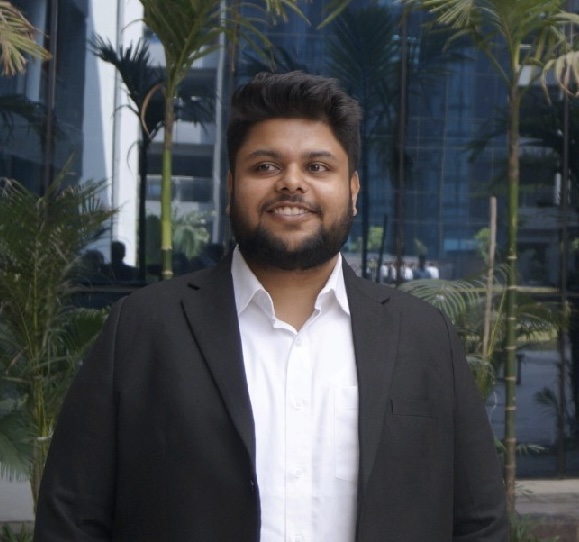
Anand Raj
Advocate & Founder
"I didn't start CompliEZ because I wanted to build a company. I started it because I kept meeting people who were working hard and living in fear. They weren't doing anything wrong—they just couldn't access the system that was supposed to protect them. That felt wrong. It still does. That's why we're here."
Background
- • BA LLB (Hons.) - NMIMS School of Law, Hyderabad
- • From Chapra, Bihar
- • Based in Hyderabad
Experience
- • Luthra & Luthra Law Offices India
- • Trilegal Mumbai
- • International Arbitration and Mediation Centre (IAMC)
Where We're Going.
"Not a roadmap. A direction. We don't pretend to know every turn ahead."
Understanding the ground reality through direct, personal work.
100+ businesses formalized. Zero theory, all practice.
Building systems that scale without losing the personal touch.
Targeting 1,000+ businesses across 5 cities.
Bringing institutional-quality legal support to Tier 2 and Tier 3 India.
5,000+ businesses, 10 cities, multiple languages.
"We don't know everything. But we know which direction matters."
This is who we are.
"If you're building something honest and want to do it with protection, we should talk."